
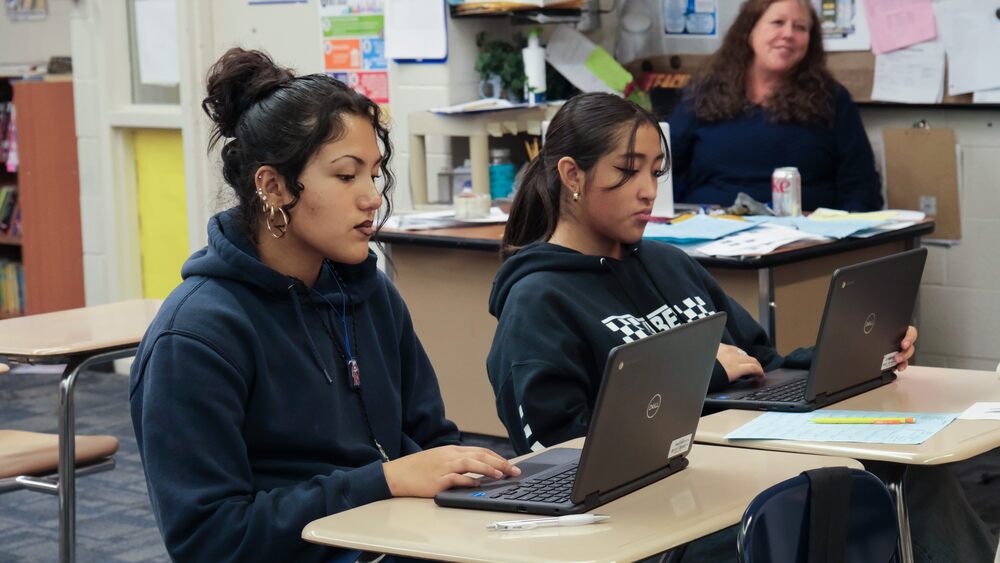
When it comes to the latest cyber threats facing our students, the "phish" are definitely biting—but you don't have to take the bait!
There has been a recent uptick in phishing attempts targeting student email accounts in Alpine School District. The attacks are designed to compromise individual accounts and gain unauthorized entry into broader district systems.
The Dangers of Phishing
“Phishing attacks remain one of the most significant cybersecurity threats facing school districts (including Alpine) because they target people rather than technology,” said Darren Draper, Administrator of Technology for Alpine School District.
Phishing is a form of cybercrime where attackers send fraudulent messages—often masquerading as trustworthy entities—to trick individuals into revealing sensitive information such as passwords, financial details, or personal data.
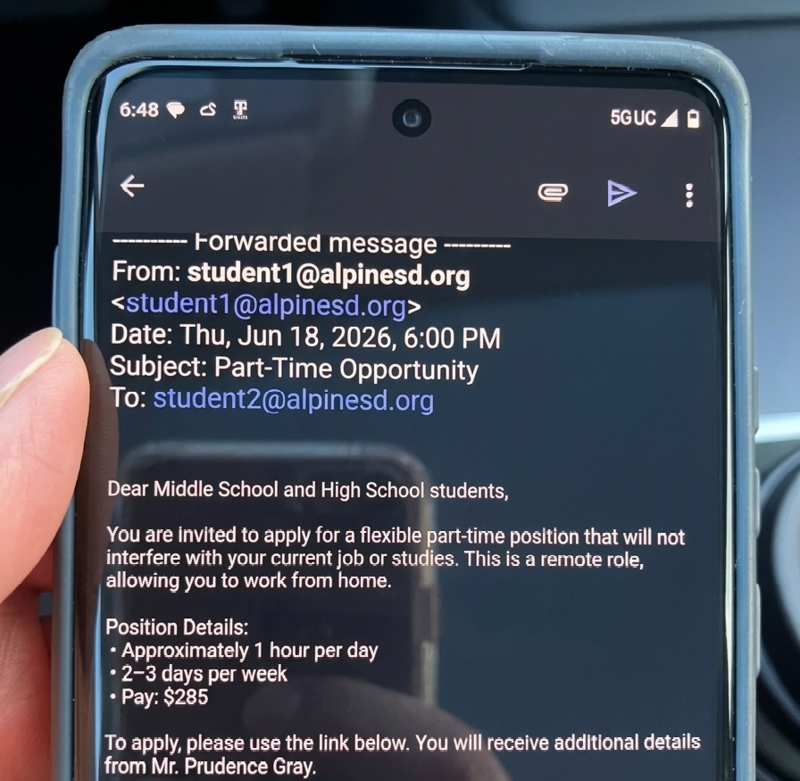
In one scam, an attacker sent an email about a job opportunity to Alpine students from a legitimate student account. If the recipient clicked on a link, then their account could be compromised.
Draper noted that a single compromised email account can grant malicious actors access to sensitive student records, employee information, and district financial processes.
“In addition to data security concerns, successful phishing attacks can disrupt school operations, create financial losses, and consume significant staff time as technology teams work to investigate and remediate incidents,” he said.
Families Are the First Line of Defense
District network security personnel are counting on families to stay informed and alert as the strongest defense against digital exploitation. Scott Chandler, network security analyst for the district, knows how important it is for families to recognize phishing attacks.
"Phishing emails and text messages often create a false sense of urgency, asking you to click a link, open an attachment, or provide personal information such as passwords or verification codes," Chandler said.
To prevent falling victim, Chandler urges users to take the following precautions:
Verify the legitimacy of any sender's address before responding
Avoid clicking on links or opening unexpected attachments unless absolutely certain the source is safe
Maintain strong, unique passwords
Enable multi-factor authentication whenever the option is available
Avoid accessing sensitive data on public Wi-Fi networks without a trusted virtual private network (VPN)
Keep software updated
“When in doubt, delete the email and ignore it,” he added, noting that school-related threats should be reported directly to the information technology department.
Building Safe Digital Habits
Parents play an essential role in helping students responsibly protect themselves and district networks. Alison Pickens is an innovative learning coach and parent of a 10th-grader at Westlake High School.
“Talk with your child about slowing down before they click,” Pickens said, advising parents to teach children how to recognize common tricks.
She points out that many scams attempt to induce panic or excitement by claiming an account is locked or offering fake prizes.
Email accounts act as a gateway to numerous other digital platforms, so understanding security basics is vital for students. Digital security experts encourage parents to have ongoing safety conversations regarding strong passwords and the dangers of sharing login credentials.
“Encourage them to look closely at the sender, watch for spelling or grammar mistakes, and be cautious of unexpected links or attachments,” she said. “Most importantly, let them know it’s always okay to ask a trusted adult if something doesn’t seem right.”
A Collaborative Defense
Protecting the district requires an active partnership between school administrators, technology experts, parents and students, along with multiple layers of defense.
“While no organization can eliminate phishing attempts entirely, our goal is to reduce risk through a combination of technology, training, and rapid response whenever suspicious activity is detected,” added Draper.
Alpine uses advanced email security to filter malicious messages before they reach inboxes, require multi-factor authentication for staff, monitor student and staff accounts for suspicious activity, and continually strengthen our security systems.
“We are constantly assessing threats and trying to bolster our network security to make sure students can learn safely,” said Draper. “Parents and employees are critical in our security efforts.”